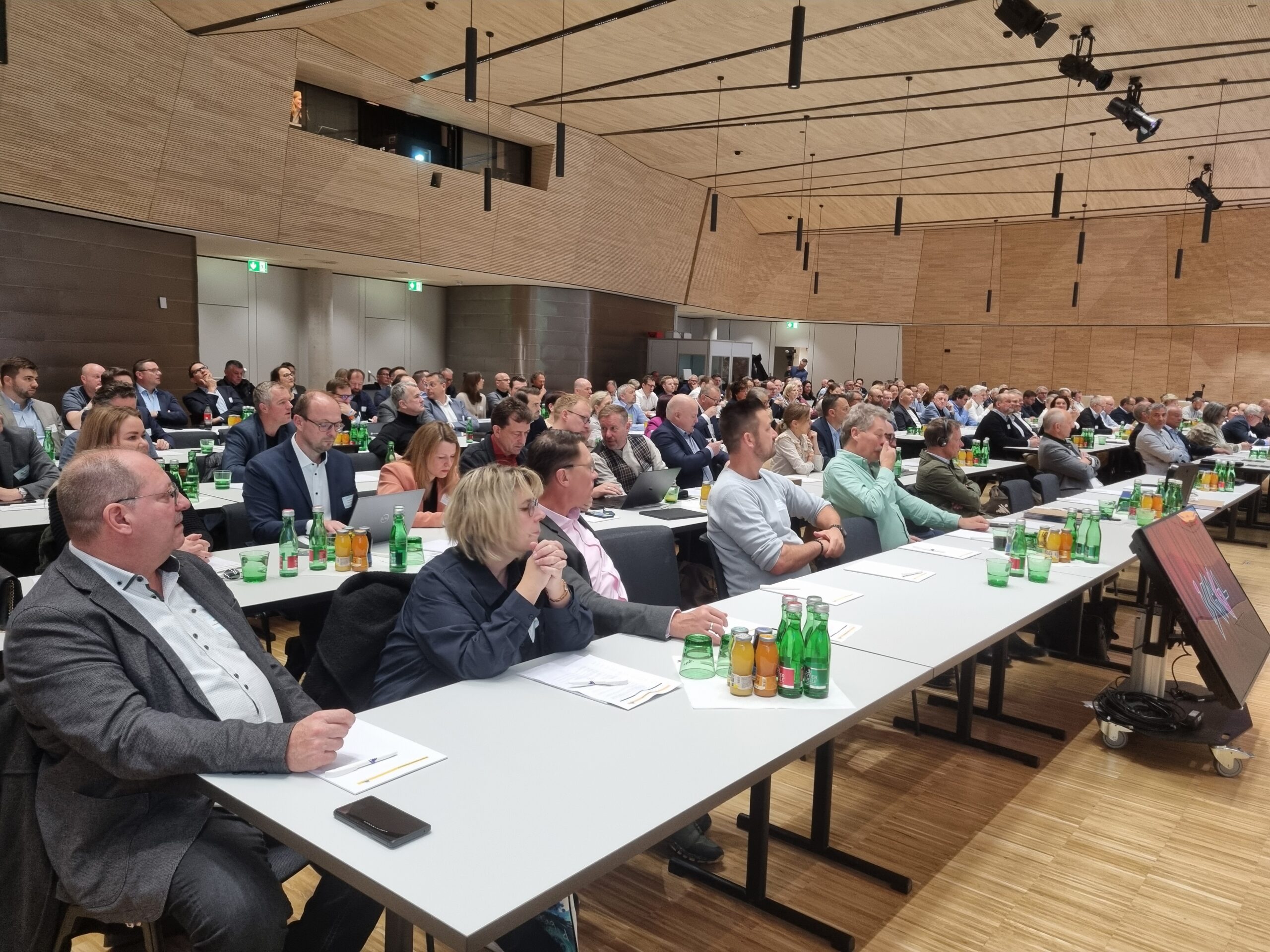
There are probably only a few waterparks, leisure pools and spas in Europe that have their own congress hall. This is the case at the Silvretta Therme in Ischgl. This provided an ideal setting for the members of the European Waterpark Association (EWA) to discuss the “Future prospects of the European waterpark business” directly in a best-practice example that opened in 2022. With 190 participants from eight European countries, the association of European weaterparks, leisure pools and spas was able to record a record attendance at its ninth international congress.
In his welcoming address, Ischgl’s mayor Werner Kurz explained the reasons behind the construction of the thermal spa: “It is not only an additional service for guests, but should also help to extend the season and attract new visitor groups”. Günther Zangerl, CEO of Silvrettaseilbahn AG, which built the thermal spa, followed on directly from Mayor Kurz’s comments and presented the Silvretta Therme together with architect Michael Krieger and managing director Andreas Ramsauer.
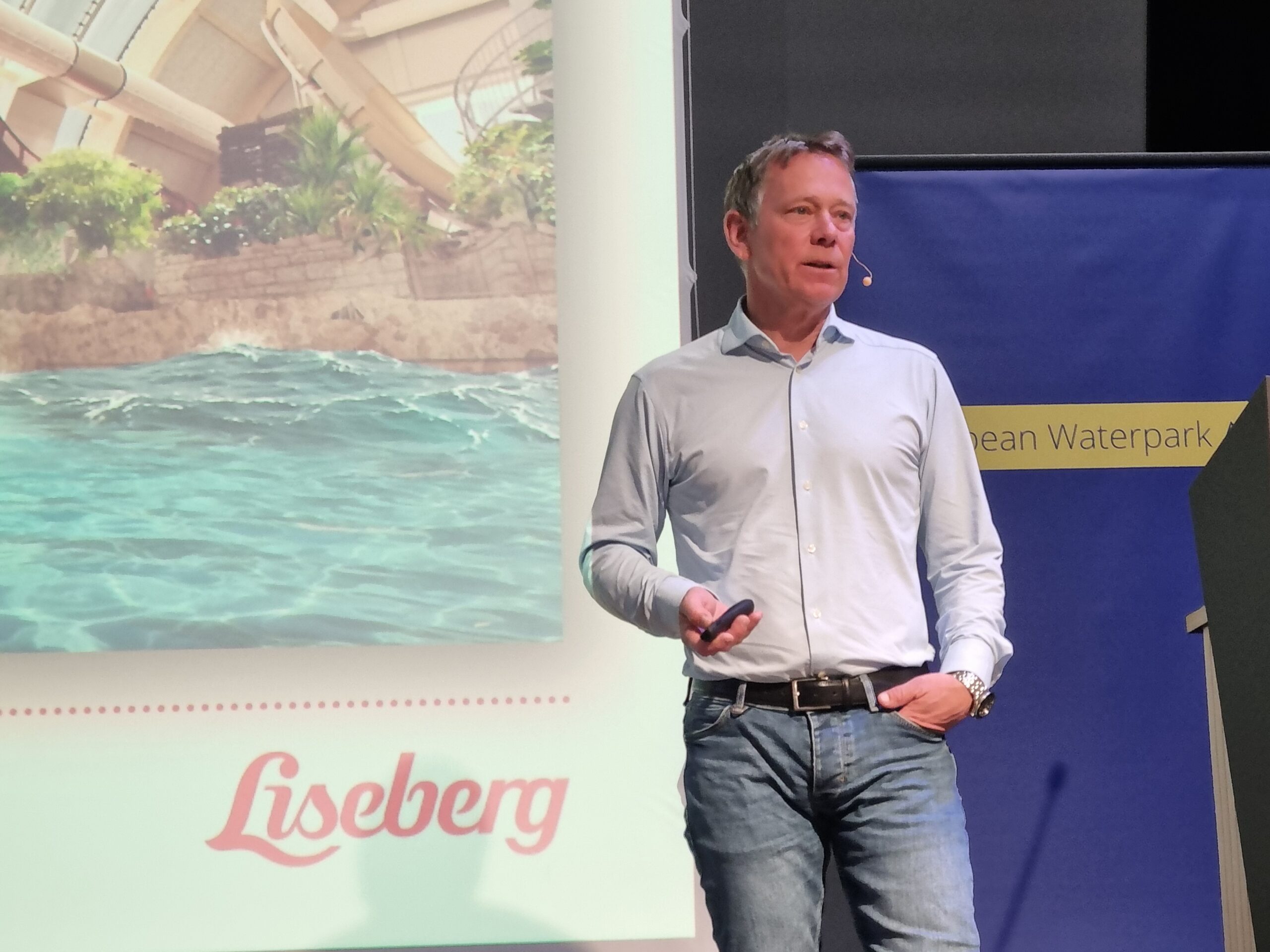
New projects and the associated new impetus for the waterpark and leisure industry were at the centre of the first day of the congress. Thomas Sjöstrand from Gothenburg had a special message in his luggage when he travelled to Ischgl: “Never give up”. The new Oceana waterpark, which is set to add another attraction to Sweden’s largest theme park, Liseberg, was actually due to open in June this year. The first pools had already been filled with water when a major fire almost completely destroyed the facility in February. The park’s management decided to rebuild, but the opening will be delayed by two years. The Swedish speaker received great applause from the audience for his statement.
The spectrum of projects presented ranged from themed large waterparks to architecturally sophisticated pool construction projects, which are more akin to sports facility construction. Olivier Zirnheld from Luxembourg presented the ambitious combination of a velodrome with a sports hall and a sports and family pool that is being built in Mondorf-les-Bains. Frankfurt’s head of swimming pools, Dr Boris Zielinski, and architect Rolf Böker showed how the new construction of Frankfurt’s “flagship” Rebstockbad will not only satisfy an urgent need for water areas for schools, sport clubs and the public, but will also set an urban development accent in the new European quarter of the Main metropolis.
“New Giga-Projects” was the title of the presentation by Rainer Maelzer from WitheWater ERA GmbH. And indeed, the projects in which the manufacturer of slides and water attractions is involved internationally are breathtaking in more ways than one. The slide tower at Meryal Waterpark in Qatar, for example, is 85 metres high – a world record! The investment sums currently being spent on new water and leisure parks in Arab countries are also record-breaking. Between 500 million and one billion US dollars are being invested in projects aimed at replacing petrochemical revenues with tourism revenues in the long term.
Increasingly large waterparks and leisure pools are also being built in Europe. Here too, the projects are focussed on the family audience. In addition to senior citizens, they will continue to shape the development of tourism and the leisure industry in the future, as Prof. Dr Torsten Widmann, Head of the Leisure Industry course at the Baden-Württemberg Cooperative State University, impressively demonstrated with figures.
While waterparks, leisure pools and spas in Europe can once again be very satisfied with the development in guest numbers following the pandemic and the rise in energy prices, as confirmed by a panel discussion with pool operators Dr Uwe Allmann (AquaMagis Plettenberg), Dr Edmund Friedl and Florian Perteneder (VAMED Group Vienna), Robin Stork (Stork Group) and Patrick Doll (monte mare Group), public pools in Europe are facing the challenge of making their operations ecologically and economically sustainable. Dr Harald Köpping from the Leipzig think tank “2b AHEAD Zukunftsforschungsinstitut” impressively demonstrated that this challenge also offers a great opportunity for leisure pools and spas and that the rather sceptical view of the future is not justified in many areas of development.
The second day of the congress was dedicated to the topics of sustainability and public and social value. Prof Dr Natalie Eßig presented the current sustainability indicators and criteria for swimming pools and described the often arduous path through the certification requirements that many pool operators face. Stefan Studer from Kannewischer Management AG in Switzerland analysed the various studies on the public and social value of swimming pools and spas. Time and again, a very comparable value emerged: One euro (or British pound or Australian dollar) invested in swimming pools and sports facilities saves around four times the amount in the countries’ healthcare systems.
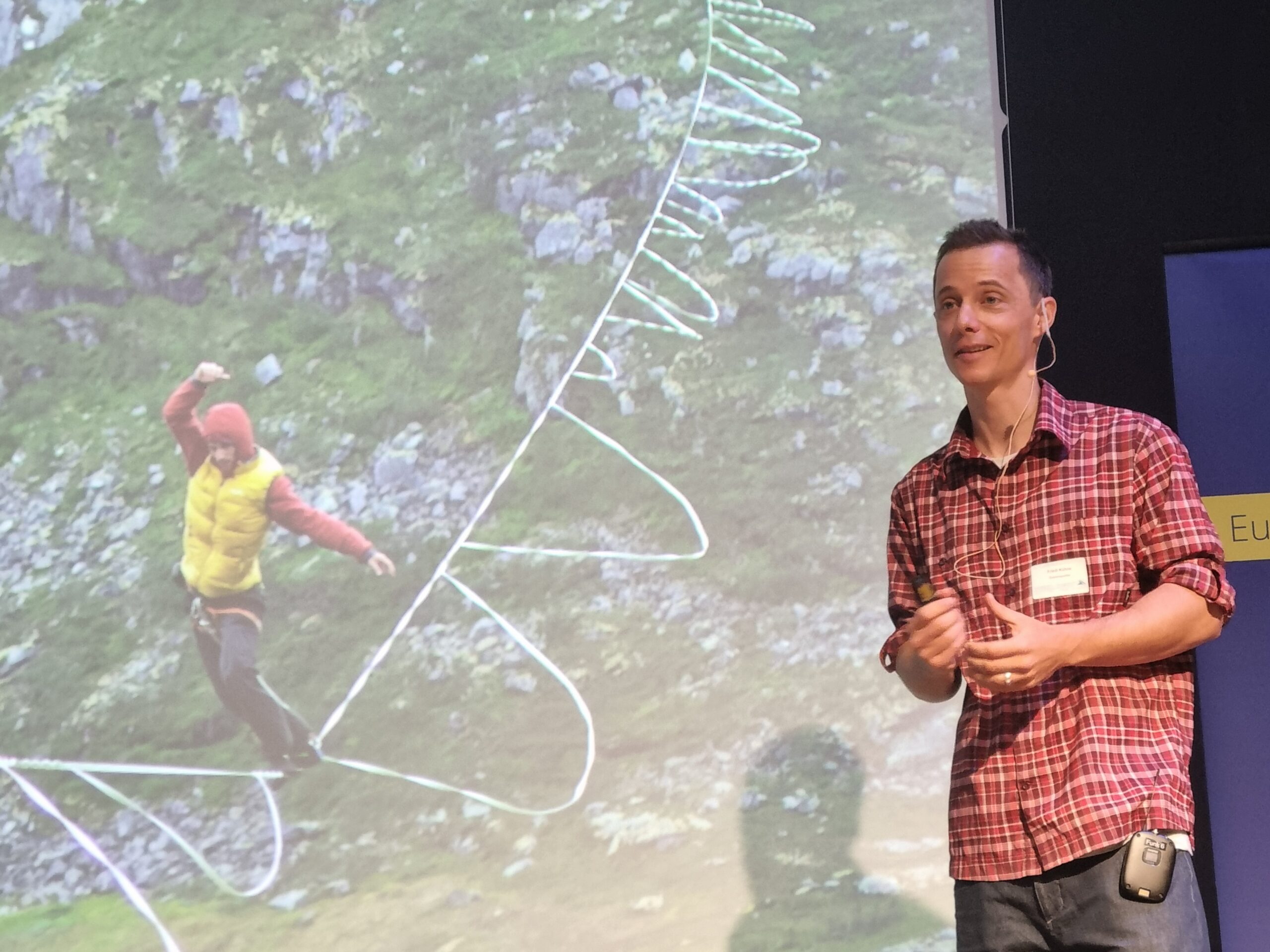
The congress ended with an impressive balancing act: extreme sportsman Friedi Kühne, multiple world record holder on the slackline, reported on his “excursion” on a 2.7 kilometre long slackline and his walk over a 70 metre long slackline, which he completed at a height of 400 metres and without a safety line in front of a thundering waterfall. His message: it not only takes courage to set such records, but also courage to make the right decision at the right time, which can also mean cancelling a record attempt. And above all, it takes a strong team that stands behind every strong individual performance.
A strong team – this was also the congress guests’ impression of the employees of the Silvretta Therme and Silvrettaseilbahn AG, who proved to be perfect hosts. By the end of the congress, 90% of the participants were already certain that they would be back at the 10th International EWA Congress “Future Perspectives of the European Spa Landscape”.